Best Robotic Knee Surgeons in Andhra Pradesh: A Guide to Choosing the Right Specialist
Living with persistent knee pain can make even simple activities feel difficult. Walking comfortably, climbing stairs, getting up from a chair, or enjoying time with family may become a challenge when the knee joint is damaged by arthritis or another condition. When medication, physiotherapy, and other non-surgical treatments no longer provide sufficient relief, knee replacement surgery may become an option to discuss with an orthopaedic specialist.
Advances in surgical technology have introduced robotic-assisted systems into knee replacement procedures. These systems can help surgeons plan operations and guide certain parts of the procedure using information about the patient’s anatomy. However, the technology is only one part of the decision. The surgeon’s experience, the patient’s medical condition, and the quality of rehabilitation also matter.
If you are searching for the Best Robotic Knee Surgeon in Andhra Pradesh, it is important to understand how robotic-assisted knee surgery works, who may benefit from it, and what to check before choosing a specialist.
This guide explains the key factors patients and families should consider when exploring robotic knee replacement options in Andhra Pradesh.
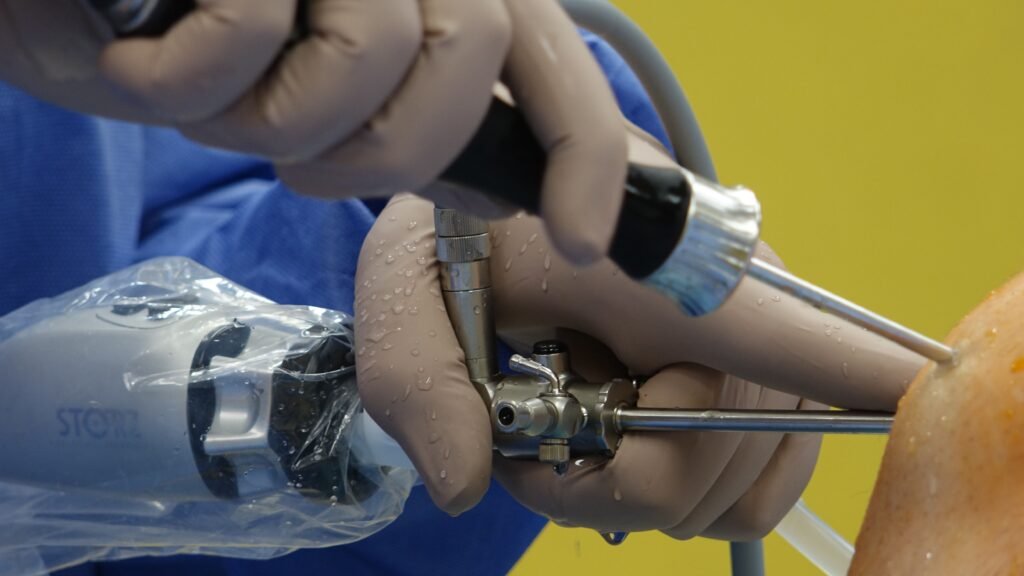
What Is Robotic Knee Replacement Surgery?
Robotic-assisted knee replacement is a surgical approach in which an orthopaedic surgeon uses a specialised computer-assisted system to support planning and, depending on the technology, guide parts of the operation.
The system may use medical imaging, anatomical measurements, or information collected during surgery to help the surgeon assess the knee and plan the placement of artificial joint components.
The surgeon remains responsible for the procedure. The robotic system does not independently decide on treatment or perform the entire operation without human control.
The exact process varies according to the technology used, the patient’s condition, and the surgeon’s technique.
Robotic assistance is used in some total and partial knee replacement procedures. Whether it is appropriate depends on the individual’s diagnosis, anatomy, health, and treatment goals.
Why Do Patients Consider Robotic Knee Surgery?
Knee replacement may be recommended for some patients with advanced osteoarthritis or other forms of severe joint damage when pain and limited movement continue despite appropriate non-surgical treatment.
Robotic-assisted systems may provide additional planning and measurement tools during selected procedures.
Potential advantages, depending on the system and clinical situation, may include:
Personalised surgical planning: Technology can help the surgeon plan component positioning based on the patient’s anatomy.
Detailed measurements: Certain systems provide information that supports assessment of alignment and joint balance.
Guidance during surgery: Robotic assistance can help guide selected surgical steps.
Consistent planning: Computer-assisted tools may support a structured approach to the procedure.
Support for surgical decision-making: Measurements may help the surgeon assess the plan and make adjustments when appropriate.
These potential benefits should not be interpreted as guarantees. Robotic assistance does not automatically mean less pain, faster recovery, fewer complications, or a longer-lasting implant for every patient. Outcomes depend on multiple factors, including the surgeon’s skill, the patient’s health, the implant, and rehabilitation.
Who May Be a Candidate for Robotic Knee Replacement?
Robotic-assisted knee replacement is not necessary for every person with knee pain.
A specialist may consider it for selected patients with significant joint damage, particularly when knee replacement is being discussed after other treatment options have been evaluated.
People who may benefit from a knee replacement assessment include those experiencing:
Persistent knee pain that interferes with everyday activities.
Advanced knee osteoarthritis.
Stiffness that significantly limits movement.
Difficulty walking or standing for normal periods.
Pain that continues despite appropriate non-surgical treatment.
Joint damage that affects quality of life.
However, symptoms alone cannot determine whether robotic surgery is suitable. The doctor will review the patient’s medical history, examine the knee, and consider imaging results where appropriate.
Some patients may improve with physiotherapy, prescribed medication, activity changes, or other treatments. Others may require a different surgical approach. The recommendation should be based on an individual assessment rather than the availability of a particular technology.
How to Choose the Best Robotic Knee Surgeon in Andhra Pradesh
Choosing a surgeon requires careful research. The presence of robotic equipment at a hospital is important if you are specifically considering robotic-assisted surgery, but it should not be the only factor in your decision.
1. Check the Surgeon’s Qualifications
Begin by reviewing the doctor’s medical qualifications, postgraduate orthopaedic training, and professional registration.
If you are considering knee replacement, look for relevant experience in joint replacement surgery. Ask whether the surgeon has training in the particular robotic-assisted system being offered.
It is also reasonable to ask how the surgeon decides between robotic-assisted and conventional techniques.
A qualified specialist should be able to explain the procedure in straightforward language and help you understand which options are suitable for your condition.
2. Ask About Experience With Knee Replacement
Experience in knee replacement is an important factor when evaluating a surgeon.
Ask about the doctor’s experience with total or partial knee replacement, depending on your diagnosis. If robotic assistance is recommended, ask about their experience using that specific system.
Rather than relying on a single number or a promotional claim, consider whether the surgeon can clearly explain the procedure, its risks, expected benefits, and the circumstances in which they would recommend another approach.
The goal is to find a specialist who can make a sound clinical decision, not simply one who uses advanced equipment.
3. Understand the Robotic System Being Used
Different robotic-assisted platforms use different technologies and workflows.
Some systems rely on preoperative imaging, while others use information gathered during surgery. Their planning tools and methods of guiding surgical steps may also differ.
During your consultation, ask:
Which robotic-assisted system is used?
How does it support the planned procedure?
Will I need additional imaging before surgery?
How will the surgeon determine implant positioning?
What are the limitations of this system?
Would conventional knee replacement also be suitable for me?
The surgeon should explain the technology without suggesting that it eliminates all surgical risks.
4. Evaluate the Hospital’s Surgical Facilities
The hospital plays an important role in the overall treatment experience.
Depending on the patient’s needs, relevant services may include preoperative assessment, anaesthesia support, operating facilities, nursing care, pain management, physiotherapy, and follow-up appointments.
If robotic-assisted surgery is being considered, confirm that the relevant equipment and trained team are available for the planned procedure.
Ask about infection-prevention practices, discharge planning, rehabilitation arrangements, and whom to contact if a concern develops after surgery.
A coordinated care team can be valuable throughout the surgical and recovery process.
5. Look for Clear Communication and Informed Consent
A good surgeon should give you time to discuss your symptoms, concerns, and expectations.
Before agreeing to an operation, you should understand why it is being recommended, what alternatives are available, and what recovery may involve.
The discussion should also cover possible complications, including infection, blood clots, stiffness, persistent pain, implant-related problems, and the possibility of further treatment.
No surgeon can guarantee a perfect result. Be cautious of claims that robotic surgery is completely risk-free or always delivers better outcomes than conventional surgery.
6. Review Rehabilitation and Follow-Up Care
Successful knee replacement involves more than the operation itself.
Rehabilitation helps patients work towards improving knee movement, muscle strength, balance, and confidence while walking. The recommended programme depends on the patient’s condition and recovery progress.
Before choosing a hospital, ask how physiotherapy is arranged, when exercises typically begin, and how follow-up appointments are managed.
You should also understand which activities may need to be restricted during the early recovery period and how progress will be monitored.
7. Compare Costs and Insurance Coverage
The cost of robotic-assisted knee replacement can vary between hospitals. It may depend on the procedure, implant, technology used, length of hospital stay, investigations, and rehabilitation arrangements.
Request a written estimate that explains what is included and whether additional expenses may arise.
If you have health insurance, confirm coverage, network-hospital requirements, exclusions, and pre-authorisation procedures directly with your insurer.
Do not select a surgeon based on price alone. Consider qualifications, relevant experience, clinical recommendations, hospital support, and the total cost of care.
Robotic Knee Replacement vs Conventional Knee Replacement
Both robotic-assisted and conventional knee replacement aim to address severe joint damage by replacing damaged joint surfaces with artificial components. The main difference is the technology used to plan and guide parts of the operation.
| Factor | Robotic-Assisted Knee Replacement | Conventional Knee Replacement |
|---|---|---|
| Surgical planning | May use computer-assisted planning and measurements | Uses established surgical planning methods |
| Technology | Uses a robotic-assisted platform for selected steps | Uses conventional instruments and surgical techniques |
| Surgeon involvement | The surgeon directs the procedure and controls the system | The surgeon performs the procedure using conventional methods |
| Suitability | Depends on diagnosis, anatomy, and system availability | Also depends on diagnosis, anatomy, and clinical judgement |
| Recovery | Varies by patient and procedure | Varies by patient and procedure |
| Cost | May be higher, depending on the hospital and system | Varies according to the hospital and procedure |
Robotic assistance is not automatically the best option for every patient. The most appropriate technique depends on the clinical situation and the surgeon’s assessment. Ask the specialist to explain the expected benefits and limitations of each suitable approach in your case.
What Happens Before Robotic Knee Replacement Surgery?
If surgery is recommended, the preparation process generally involves several steps.
Medical Evaluation
The doctor reviews your symptoms, medical history, medicines, previous treatments, and overall health. Additional assessment may be required for conditions such as diabetes, heart disease, or other illnesses that could affect surgery or recovery.
Imaging and Surgical Planning
Depending on the robotic system and procedure, the surgeon may use X-rays, other imaging, or measurements collected during surgery to plan the operation.
Not every robotic-assisted procedure requires the same type of imaging.
Preoperative Instructions
The care team explains medication instructions, fasting requirements, hospital admission arrangements, and other preparations.
Patients should tell the team about all medicines, supplements, allergies, and relevant medical conditions. Do not stop prescribed medicines unless your treating clinician advises you to do so.
Planning for Recovery
Before surgery, discuss transport home, assistance with daily activities, home safety, and physiotherapy arrangements.
Preparing in advance can make the transition from hospital to home more manageable.
Recovery After Robotic Knee Replacement
Recovery varies from person to person. Age, general health, muscle strength, the severity of the original condition, and the type of procedure can all influence progress.
Many patients begin supervised movement and walking with assistance relatively soon after knee replacement, when the treating team considers it safe. Physiotherapy then helps improve movement and strength.
During recovery, patients may be advised to:
Follow the prescribed exercise programme.
Use walking aids as recommended.
Attend scheduled follow-up appointments.
Take prescribed medicines according to instructions.
Keep the surgical wound clean and follow wound-care guidance.
Increase activity gradually as advised by the care team.
Pain and swelling can occur during recovery, but symptoms should be monitored according to the instructions provided by the hospital.
Seek prompt medical attention for concerning symptoms such as sudden chest pain, shortness of breath, significant calf swelling or pain, or a fever accompanied by increasing wound redness or discharge. Follow the surgical team’s instructions for any urgent concerns.
Questions to Ask Before Choosing a Robotic Knee Surgeon
Before making a decision, prepare a list of questions for your consultation.
What is causing my knee pain?
Is knee replacement necessary at this stage?
Have non-surgical treatments been considered adequately?
Am I a suitable candidate for robotic-assisted surgery?
What experience do you have with this procedure and robotic system?
What are the potential benefits and risks in my case?
Would conventional knee replacement be a reasonable alternative?
What implant options are appropriate for me?
How long might I need hospital care and rehabilitation?
What is included in the estimated treatment cost?
These questions can help you compare treatment options and understand whether the proposed approach fits your needs.
Robotic Knee Surgery at Happy Hospitals, Guntur
Patients researching orthopaedic care in Andhra Pradesh may wish to explore Happy Hospitals in Guntur as one of their options.
The hospital’s published information identifies Dr. Sivaiah Potla with its orthopaedic and joint-related care. If you are considering robotic-assisted knee replacement, contact Happy Hospitals directly to confirm whether the required robotic system and procedure are currently available, which surgeon would perform the operation, and whether you are likely to be a suitable candidate.
It is important to distinguish between a hospital offering orthopaedic or joint replacement services and one currently providing a specific robotic-assisted procedure. Confirming these details before booking a consultation can help you make an informed decision.
When looking for the Best Robotic Knee Surgeon in Andhra Pradesh, compare the surgeon’s qualifications, experience, treatment recommendations, hospital support, and rehabilitation arrangements. The right choice should be based on your individual clinical needs rather than technology alone.
Frequently Asked Questions
Who is the best robotic knee surgeon in Andhra Pradesh?
There is no single surgeon who is the best choice for every patient. Consider medical qualifications, experience with knee replacement, training in the relevant robotic system, communication, hospital facilities, and the suitability of the recommended treatment. Verify current information directly with the doctor or hospital.
Is robotic knee replacement better than conventional surgery?
Robotic assistance can provide additional planning and guidance during selected procedures. However, it does not guarantee better outcomes for every patient. The most appropriate approach depends on the condition, the surgeon’s experience, the technology available, and individual clinical factors.
Does robotic knee surgery guarantee faster recovery?
No. Recovery depends on the procedure, the patient’s general health, pain management, rehabilitation, and other factors. Robotic assistance alone does not guarantee a faster or easier recovery.
How long does recovery from knee replacement take?
Recovery varies. Patients may begin assisted walking and rehabilitation soon after surgery, but regaining strength, mobility, and confidence can take weeks to months. Your surgeon and physiotherapist can provide guidance based on your progress.
Is robotic knee replacement more expensive?
It may cost more in some hospitals because of the technology and related resources, but costs vary. Ask for a detailed estimate and confirm insurance coverage before proceeding.
How can I prepare for a consultation about robotic knee surgery?
Bring previous X-rays or scan reports, prescriptions, a list of current medicines, and details of treatments you have already tried. Prepare questions about diagnosis, alternatives, risks, costs, and rehabilitation.
Final Thought
Robotic-assisted knee replacement has added new planning and guidance tools to modern orthopaedic surgery, but technology should never be the only factor when choosing a surgeon. Qualifications, relevant experience, careful diagnosis, honest communication, hospital support, and rehabilitation all contribute to the overall treatment journey.
If you are searching for the Best Robotic Knee Surgeon in Andhra Pradesh, take time to understand your diagnosis and compare the options available to you. Ask whether robotic-assisted surgery is appropriate for your condition, what benefits it may offer, and how its risks and costs compare with other suitable approaches.
Happy Hospitals in Guntur is one option to explore for orthopaedic and joint-related care. Confirm the availability of robotic-assisted knee replacement and the relevant surgeon’s experience directly with the hospital. A well-informed decision, guided by a qualified medical professional, is an important first step towards managing knee pain and working towards better mobility.
Recent Articles
-
Best Apple Watch Bands for a Stylish and Comfortable Everyday Look
-
Blinkit Gift Cards: A Convenient Way to Gift Everyday Essentials
-
Hot Wallet vs Cold Wallet: Understanding the Differences for Solana Users
-
Biotin Tablets vs Gummies: Which Supplement Format Should You Choose?
-
When Should You Call a Home Visit Doctor in Mauritius?


